Skip to Content

Sleep Apnea Treatment & Oral Appliance Therapy in Wahpeton, ND

Sleep apnea care · Wahpeton, North Dakota

Snoring, waking up exhausted, or struggling with CPAP? Let’s find out what’s going on.

Our $165 Sleep Apnea Evaluation brings together a dental exam, home sleep testing when appropriate, review by a board-certified sleep physician, and a personal explanation of your results from Dr. Haley or Dr. Foley — so you know exactly what to do next.

$165

Sleep Apnea Evaluation

  • Dental exam & needed X-rays
  • One-on-one visit with Dr. Haley or Dr. Foley
  • One-night home sleep test with our sleep ring — no additional testing fees
  • Interpretation by a board-certified sleep physician
  • Follow-up visit about three weeks later to explain results & next steps

The $165 fee covers the evaluation and home sleep test. Oral appliances and other treatment are priced separately and reviewed with you before you decide. Insurance coverage is not guaranteed.

Signs of Sleep Apnea

Sleep apnea causes breathing to stop or become too shallow many times during sleep. Many people don’t know they have it. Common signs include:

Loud, frequent snoring

Often noticed first by a spouse or partner.

Gasping or pauses in breathing

Choking, snorting, or silent pauses during sleep.

Morning headaches or dry mouth

Waking with a headache, dry mouth, or feeling unrefreshed.

Daytime sleepiness

Needing caffeine to get through the day, or dozing off.

Trouble focusing

Poor concentration, memory, or mood.

Difficulty with CPAP

Already diagnosed, but your mask or machine isn’t working for you.

Snoring doesn’t always mean sleep apnea — a sleep test is how you find out.

Why Sleep Apnea Matters

Obstructive sleep apnea (OSA) is common and often goes unrecognized. A 2025 study estimates that about 1 in 3 U.S. adults age 20 and older (32.4%) may have OSA, and most cases have never been diagnosed. It affects much more than snoring: when breathing repeatedly pauses, oxygen levels can drop and sleep is broken up all night long.

Untreated sleep apnea is associated with:

Daytime sleepiness
Poor focus
High blood pressure
Heart problems
Stroke

Sources: National Council on Aging, citing Sönmez et al., Respiratory Medicine (2025); American Academy of Sleep Medicine.
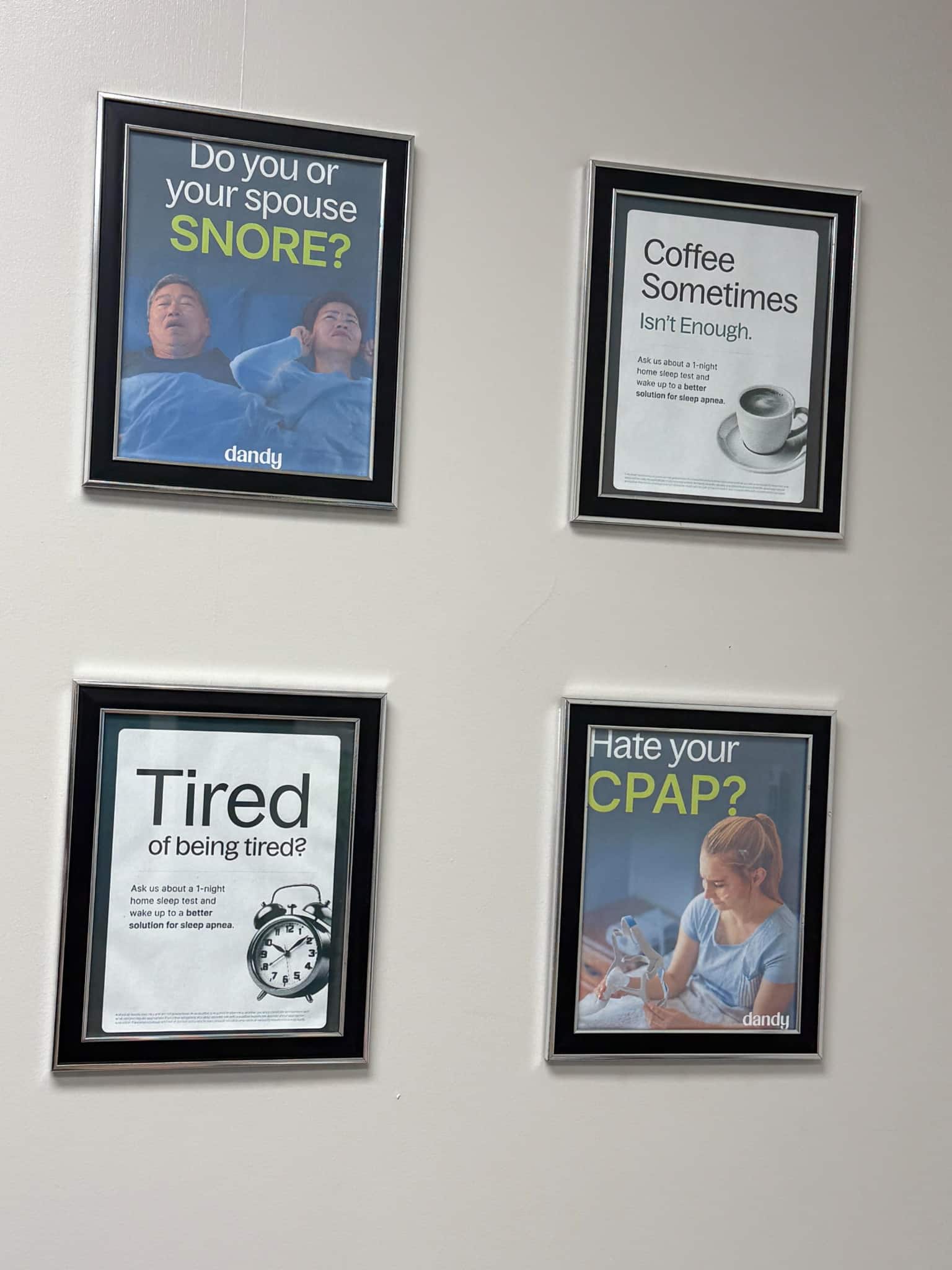
WFD Sleep Education In Office
Conversations about snoring, daytime fatigue, and sleep apnea are part of the care we provide at Wahpeton Family Dentistry.

Our Approach: Your Dental Team and a Sleep Physician, Working Together

Dr. Mason Haley has invested significant time in continuing education focused on obstructive sleep apnea — how it affects the whole body and the full range of treatment options — including the Spencer Study Club with Dr. Jamison Spencer. Our goal is not to tell every patient that a dental appliance is the answer. It’s to help you understand what’s happening, get an appropriate medical diagnosis, and choose a path that fits your needs.

Dr. Haley & Dr. Foley
  • Dental exam, X-rays, and airway-related dental findings
  • Home sleep test setup when appropriate
  • Explain the physician’s findings in plain language
  • Custom oral appliance therapy for appropriate patients
  • Help coordinating with your medical insurance
Board-certified sleep physician
  • Reviews your health history and sleep test
  • Interprets the study and makes the diagnosis
  • Recommends treatment and whether more testing (including in-lab) is needed
  • Arranges follow-up testing to confirm treatment is working

“The more I learned about sleep apnea, the more I realized how many people around us are struggling with it. We see these patients every day, and many don’t even know they have it. That’s why we developed a straightforward path to help people get properly screened, understand their treatment options, and receive the care they need. Making that process simple, accessible, and affordable—and helping people sleep better and feel better—is something I’m incredibly proud of.”

— Dr. Mason Haley, Wahpeton Family Dentistry

What Your $165 Sleep Apnea Evaluation Includes

1

Visit 1: Exam & consultation

A dental exam, any needed X-rays, and a one-on-one consultation with Dr. Haley or Dr. Foley. You leave with our sleep ring.

2

One night at home

Wear the sleep ring for one night in your own bed, with no additional testing fees. You complete a short medical and insurance intake on your own time.

3

Sleep physician review

A board-certified sleep physician interprets your test and decides whether any further testing is needed.

4

Visit 2: Results & next steps

About three weeks later, we explain your results, discuss your options, and plan what comes next.
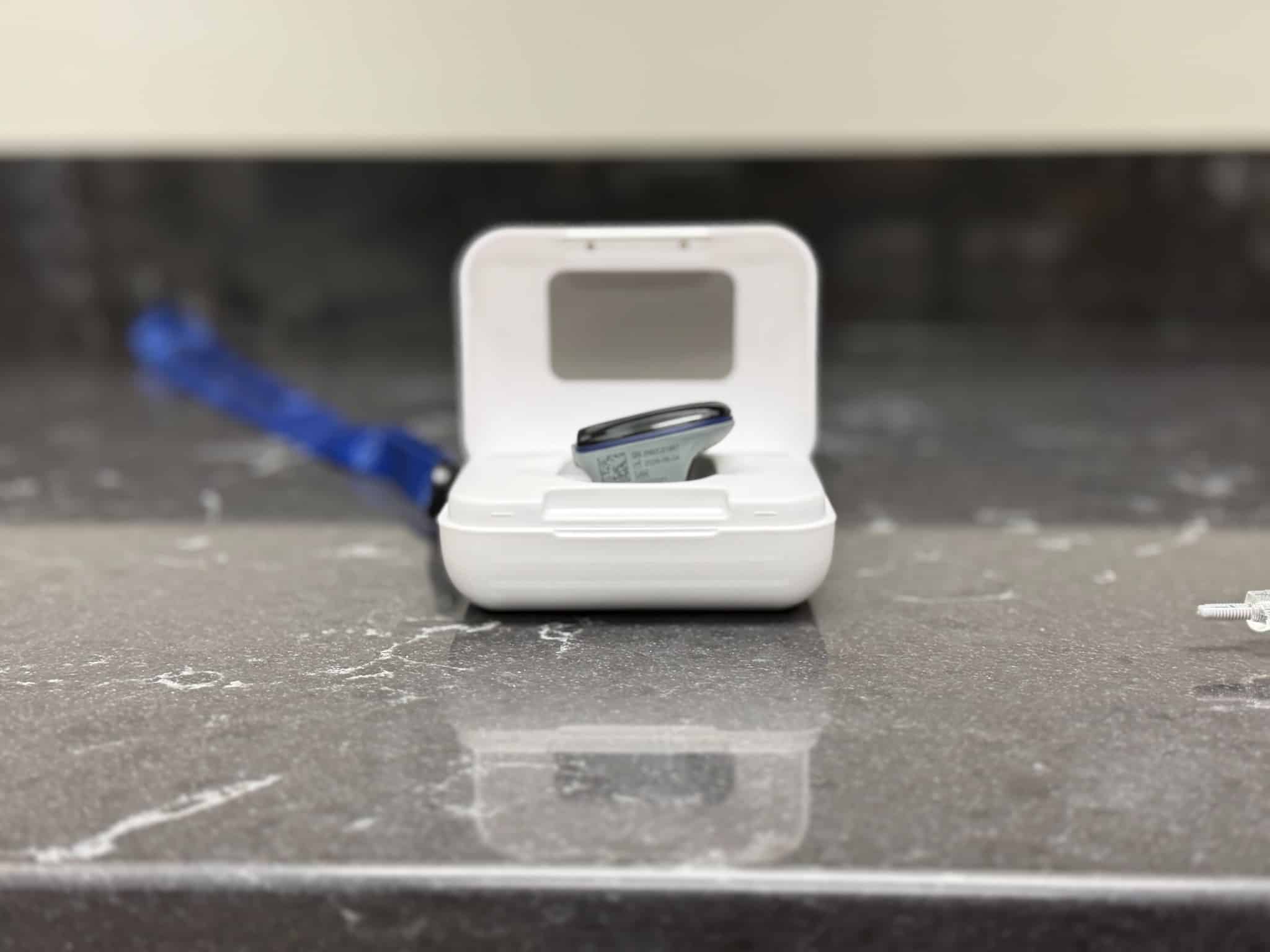
WFD Home Sleep Test Ring
Wear the sleep ring for one night in your own bed when home testing is right for you. A sleep physician reviews the test, and Dr. Haley or Dr. Foley explains the findings and next steps. Some patients need additional or in-lab testing.
One clear price

$165 covers your exam and home sleep test, with no additional testing fees.

Test at home

Two visits about three weeks apart, with one night of testing in your own bed.

Physician involved

A board-certified sleep physician interprets your results.

A personal plan

We explain your results and walk you through your options.

Sleep Apnea Treatment Options

There’s no single right answer for everyone. Your sleep physician helps choose a safe plan, and we help you understand every option — including the ones we don’t provide.

Provided at Wahpeton Family Dentistry
In our office

Custom oral appliance therapy (MAD)

Custom, adjustable mouthpiece for appropriate patients with obstructive sleep apnea.

Fitting, adjustments & follow-up

Gradual adjustments and regular checks of your teeth, jaw, and bite.

Testing coordination

Home sleep testing when appropriate, and follow-up testing with your appliance.


Discussed & coordinated
With your physician

CPAP / PAP therapy

Often the first choice, especially for severe OSA.

Myofunctional therapy

Exercises for the tongue, lips, and throat that may help some people.

Inspire® upper airway stimulation

An implanted device for certain people with moderate to severe OSA who can’t use CPAP.

Weight & lifestyle care

Sleep position, weight management, and other habits.

Medical or surgical referral

ENT or surgical evaluation when appropriate.

Sleep apnea care · Wahpeton, North Dakota

Oral Appliance Therapy

A mandibular advancement device (MAD) is a custom, adjustable mouthpiece worn during sleep. It gently holds the lower jaw forward to help keep the airway open. MADs are often used for mild to moderate OSA and may be an option if you can’t tolerate CPAP or prefer another treatment.

Why patients like oral appliances
Small
Fits in your hand
Quiet
No machine noise
Portable
Easy to travel with
No electricity
Nothing to plug in
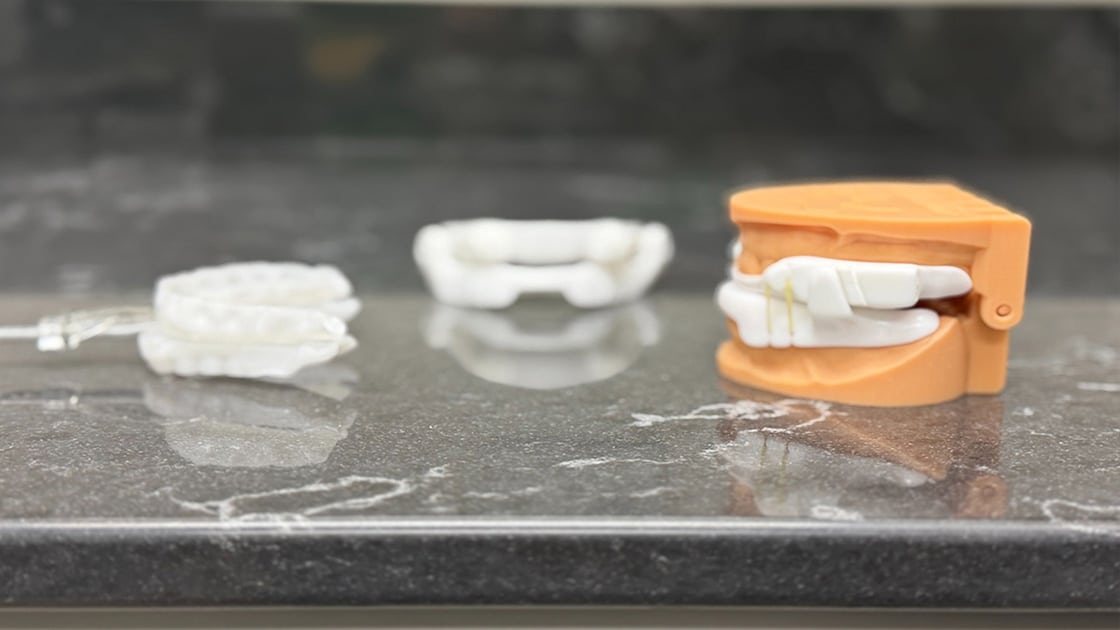
WFD acrylic
Custom oral appliances gently hold the lower jaw forward to help keep the airway open during sleep. They may be an option for appropriate patients with obstructive sleep apnea.

Important to know

  • A MAD is not right for everyone. A sleep diagnosis and dental exam show whether it’s a good fit.
  • CPAP remains important — especially for severe OSA.
  • Please don’t stop or change prescribed treatment on your own. Your care team will help you switch safely.
  • Feeling better or snoring less doesn’t prove sleep apnea is controlled — follow-up testing checks the result.

Your oral appliance journey

STEP 1
Diagnosis & candidacy
Sleep physician diagnosis plus a dental check of teeth, gums, and jaw.
STEP 2
Scan & bite record
We scan your teeth and record your bite for a custom device.
STEP 3
Fitting
We fit your appliance and show you how to wear and clean it.
STEP 4
Adjustments
Your lower jaw is moved forward in small, comfortable steps.
STEP 5
Follow-up sleep test
Testing with the device checks that it’s working.
STEP 6
Ongoing checkups
Regular visits for your teeth, bite, and device.

Already diagnosed and struggling with CPAP?

You’re not alone. Keep using your prescribed treatment for now, and call us to talk about whether a custom oral appliance could be an option for you.

Sleep Apnea & Oral Appliance FAQs

50 common questions, simple answers. Choose a topic to get started.

What is sleep apnea?
Sleep apnea makes your breathing stop or become too shallow many times while you sleep. This can lower your oxygen and break up your sleep.
What is obstructive sleep apnea (OSA)?
OSA is the most common type of sleep apnea. It happens when your throat becomes too narrow or closes while you sleep.
What are common signs of sleep apnea?
Signs include loud snoring, gasping, and pauses in breathing. You may also wake with a headache or dry mouth, or feel tired during the day.
Can I have sleep apnea if I am not overweight?
Yes, people at any weight can have sleep apnea. Age, family history, and the shape of your jaw and airway can also raise your risk.
Does snoring mean I have sleep apnea?
Not always, but loud or frequent snoring can be a warning sign. A sleep test can show whether you have sleep apnea.
Why is untreated sleep apnea a concern?
Untreated sleep apnea is linked to high blood pressure, heart problems, and stroke. It can also make you sleepy during the day and raise your risk of a crash.
Can sleep apnea affect my energy and thinking?
Yes, broken sleep can leave you tired and make it hard to focus or remember things. These problems can happen even after a full night in bed.
How is sleep apnea diagnosed?
A sleep test records signals that help check your breathing while you sleep. A sleep physician reviews the test and your health history to make a diagnosis.
Can I do a sleep test at home?
Many adults with signs of sleep apnea can take a home sleep test. A sleep physician decides if home testing is right for you or if you need a sleep lab.
What is included in WFD's $165 sleep screening?
It includes a dental exam, needed X-rays, a visit with Dr. Haley or Dr. Foley, and a home sleep test when appropriate. It also includes review by a board-certified sleep physician and a follow-up visit to discuss results and next steps.

Is CPAP the only treatment for sleep apnea?
No, other options may include a custom mouthpiece, changes in weight or sleep habits, mouth exercises, or surgery. Your sleep physician helps choose a safe plan for your needs.
What is myofunctional therapy?
It uses exercises for your tongue, lips, and throat muscles. It may help some people, but should not replace your sleep apnea treatment unless your care team recommends it.
What is Inspire?
Inspire is a device placed inside the body during surgery that uses gentle nerve signals to help keep the airway open. It is for certain people with moderate to severe OSA who cannot use CPAP or do not get enough benefit from it.
What is a mandibular advancement device, or MAD?
A MAD is a custom mouthpiece, also called an oral appliance, worn during sleep. It holds your lower jaw forward to help keep your airway open.
How does a MAD help sleep apnea?
Moving your lower jaw forward can make more room behind your tongue. This can reduce snoring and breathing pauses for the right person.
Is a MAD the same as a sports mouthguard or night guard?
No, those guards mainly protect your teeth. A MAD is made to hold your lower jaw forward to help you breathe during sleep.
Who may be a good candidate for a MAD?
Adults with OSA may be candidates, especially those who cannot use CPAP or prefer a mouthpiece. A sleep diagnosis and dental exam help show if it is right for you.
Are MADs only for mild to moderate sleep apnea?
They are often used for mild to moderate OSA. CPAP is usually the first choice for severe OSA, but a sleep physician may consider a MAD when CPAP cannot be used.
Can I use a MAD if I hate my CPAP?
A MAD may be an option if CPAP is hard for you to use. Talk with your care team before stopping or changing your current treatment.
Does CPAP work better than a MAD?
CPAP usually lowers breathing pauses more than a MAD. A custom MAD can still work well for some people, and testing helps check the results.

What does a MAD feel like?
You may notice pressure on your teeth or jaw at first. We check the fit and adjust the device to help make it comfortable.
Will a MAD hurt my jaw or teeth?
Mild soreness can happen when you start or change the setting. Call us if pain is strong, gets worse, or does not go away.
What side effects can a MAD cause?
Side effects may include sore teeth or jaw muscles, dry mouth, extra saliva, or bite changes. Follow-up visits help us find and manage these problems.
Can a MAD change my bite?
Yes, your teeth or bite can shift over time. We check for changes and may suggest morning jaw exercises or a bite guide.
Why choose a custom MAD instead of a store-bought device?
A custom MAD is made to fit your teeth and can be adjusted in small steps. Sleep care guidelines favor custom, adjustable devices over store-bought ones for OSA.
How is a custom MAD made?
We check your teeth and jaw, take a scan or mold of your teeth, and record your bite. A dental lab then makes a device to fit your mouth.
How is the appliance adjusted?
The lower jaw is moved forward in small steps based on your care plan. The goal is better breathing with a setting your teeth and jaw can handle.
How do we know if the MAD is working?
Your sleep physician arranges follow-up sleep testing while you wear the device. Feeling better or snoring less does not prove that sleep apnea is controlled.
Do I still need follow-up after I get the appliance?
Yes, visits help us check your teeth, jaw, bite, and the device. Your sleep care team also checks that your treatment still works.
Can I travel with a MAD?
Yes, a MAD is small, quiet, and needs no electricity. Pack it in its case and follow the care steps we give you.

Do I need to wear my MAD every night?
Use it each time you sleep, including naps, as your care team directs. It only helps keep your airway open while you wear it.
Does a MAD cure sleep apnea?
A MAD treats OSA while you wear it, but it is not usually a cure. Keep using your prescribed treatment unless your sleep physician changes your plan.
Can I stop CPAP as soon as I receive a MAD?
Do not stop prescribed CPAP on your own. Your care team will explain how to switch safely and test whether the MAD works for you.
Can I use a MAD and CPAP together?
Some people use both as part of a plan from their sleep care team. Do not change CPAP settings or add a device on your own.
Can I adjust the MAD myself?
Only make changes that your dental team has taught you to make. Moving your jaw too far or too fast can cause pain and may not improve your breathing.
How do I clean my MAD?
Follow the cleaning steps for your exact device and clean your teeth before wearing it. Avoid hot water or harsh cleaners unless the maker says they are safe.
What should I do if my MAD breaks or no longer fits?
Call our office and do not force or glue the device. Ask your sleep care team how to keep your sleep apnea treated while it is repaired or replaced.
How long does a MAD last?
Its life depends on the device, wear, and how you care for it. We check it at follow-up visits and tell you when it needs repair or replacement.
Can I use a MAD if I have missing or loose teeth?
It depends on how many healthy teeth you have and how well they can support the device. Gum disease or loose teeth may need care before a MAD is safe.
Can I use a MAD if I have crowns, implants, or dentures?
Crowns or implants do not always rule out a MAD, but each mouth needs an exam. Dentures may limit your options or require a different device.

Can I use a MAD if I have jaw joint pain?
Sometimes, but we need to check your jaw first. Tell us about pain, locking, or trouble opening your mouth so we can choose a safe plan.
Does a MAD treat central sleep apnea?
No, a MAD treats airway blockage, not a problem with the brain's breathing signals. Central sleep apnea needs care from a sleep physician.
Can a MAD help snoring without sleep apnea?
A custom mouthpiece can help some adults who snore but do not have OSA. A sleep evaluation should rule out sleep apnea before treating snoring alone.
Will medical insurance help pay for a MAD?
Some medical plans cover oral appliances for diagnosed OSA when plan rules are met. Coverage, approval, and your share of the cost depend on your plan.
Does the $165 screening price include the MAD?
No, the $165 offer is for the evaluation and testing process, not an oral appliance. We will review treatment choices and costs with you before you decide.
What if I still feel tired while using my MAD?
Tell your dental team and sleep physician so they can check your treatment and other causes of poor sleep. Do not drive when you feel sleepy.
How do I use the sleep ring?
Our team shows you how to wear the ring at home for one night. Your sleep physician reviews the test and decides whether more testing is needed.
What if my home sleep test looks normal but I still have symptoms?
A home test can miss sleep apnea. Your sleep physician may recommend a sleep lab test if symptoms continue or the home test is unclear.
Will I understand my sleep test results?
Dr. Haley or Dr. Foley will review the physician's findings with you in plain language. We will discuss your choices and help plan the next step.
How do I get started at Wahpeton Family Dentistry?
Call 701-642-8566 or use the sleep screening link on our website. Our team will help you start the $165 evaluation and explain what to expect.

Ready to Sleep Better?

Start with a clear, affordable evaluation and a personal plan from a team that knows you.

Wahpeton Family Dentistry · 103 9th St N, Ste 2, Wahpeton, ND 58075
Serving Wahpeton and Breckenridge, and welcoming patients who travel from Fargo–Moorhead and surrounding communities.

Contact our office today to schedule your appointment!

Wahpeton Family Dentistry

ADDRESS

103 9th St N, Ste 2
Wahpeton, 
ND 
58075

PHONE

Fax: 

701-642-1111
location
Wahpeton Family Dentistry
103 9th St N, Ste 2
Wahpeton,
ND
58075
701-642-8566
HOURS
Monday
7am - 4pm
Tuesday
7am - 4pm
Wednesday
7am - 4pm
Thursday
7am - 4pm
Friday
7am - 12pm Once Monthly
Saturday
Closed
Sunday
Closed
SOCIAL
Accessibility
 
DESIGN AND CONTENT ©
2013-
2026
BY
DENTALFONE